
Open Architecture in Practice: Raising the Standard for Quantum Control with QuantWare’s Soprano-D5 QPU
Executive Summary
With their Qubit Lab, Qblox is building one of the most complete open architecture quantum stacks in operation today. At its core sits QuantWare’s Soprano-D5 QPU, the superconducting processor enabling Qblox to benchmark and refine the precision of their control electronics on a real device. The results achieved with Soprano-D5 are helping set new standards for control fidelity, reproducibility, and integration in scalable quantum systems.
About Qblox
Qblox provides scalable and modular qubit control stacks, supporting academic and industrial labs worldwide. Qblox Cluster control stack integrates key technologies for qubit control and readout, and supports a wide variety of qubit types.
The Qubit Lab: Benchmarking the Full Stack
%20Large.jpeg)
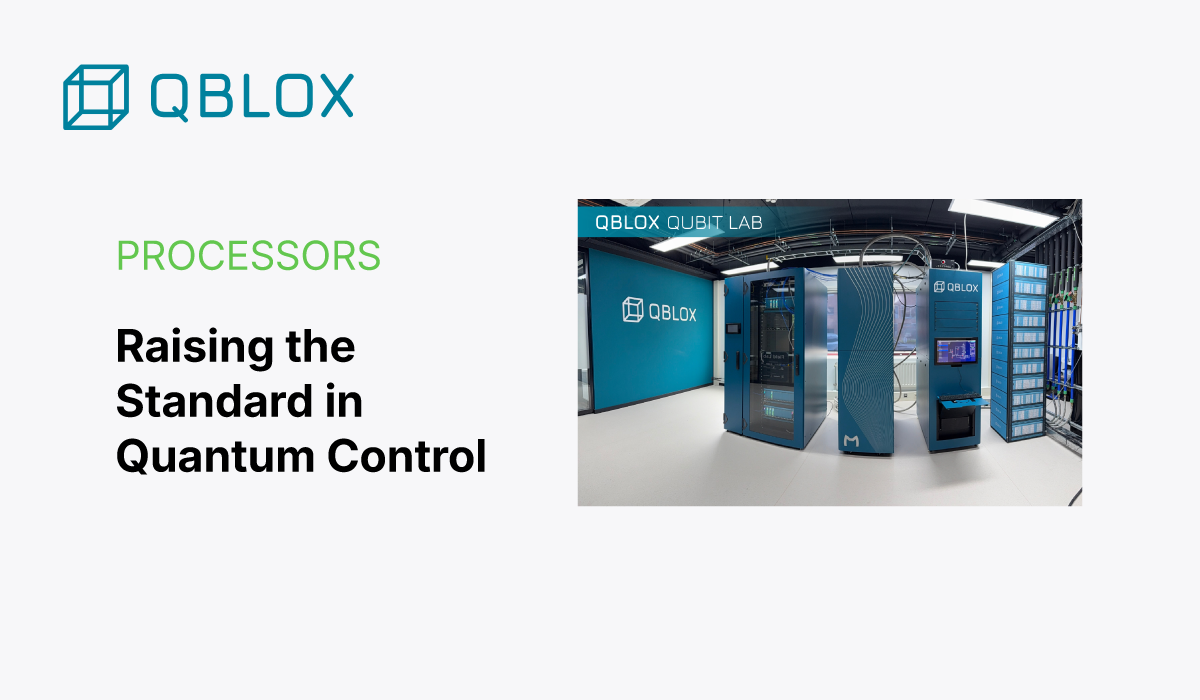
The company’s Qubit Lab brings to life the vision of a fully integrated setup that unites every layer of the quantum stack: QuantWare’s Soprano-D5 QPU, a Maybell cryostat, Delft Circuits cabling, Qblox control hardware, and QuantrolOx software. The result is a platform where new control methods and algorithms can be developed and tested directly on a quantum processor.
Within the Qubit Lab, Qblox uses the Soprano-D5 processor as a stable, high-quality testbed for validating and refining its control electronics. The setup allows the team to benchmark key performance parameters such as noise levels, flux control, and gate fidelity, under realistic operating conditions.
➡️ Walk through the Qubit Lab
The lab has already produced notable outcomes. Using Soprano-D5, Qblox demonstrated direct flux-biasing combined with digital precompensation, enabling high-fidelity two-qubit gates as part of their HectoQubit research. The team also presented key findings at the APS March Meetings in 2025 and 2026, where they showcased bias-T-free flux-biasing and low-noise operation of their Qubit Control Module (QCM) baseband electronics at the sweet spot.
All publicly available Qblox notebooks are verified on the Soprano-D5 chip, a testament to the device’s reliability and consistency as a platform for research and development.
Open Architecture Meets High-Performance Qubits
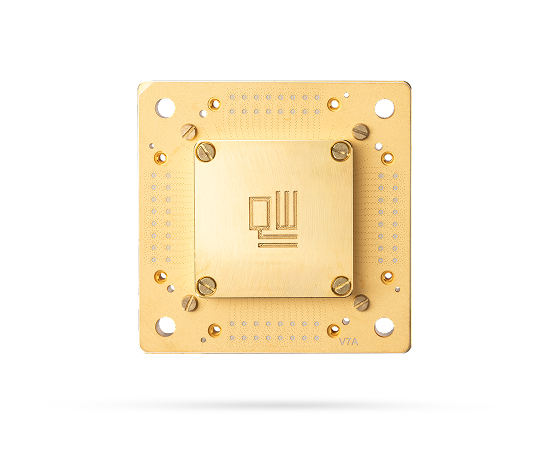
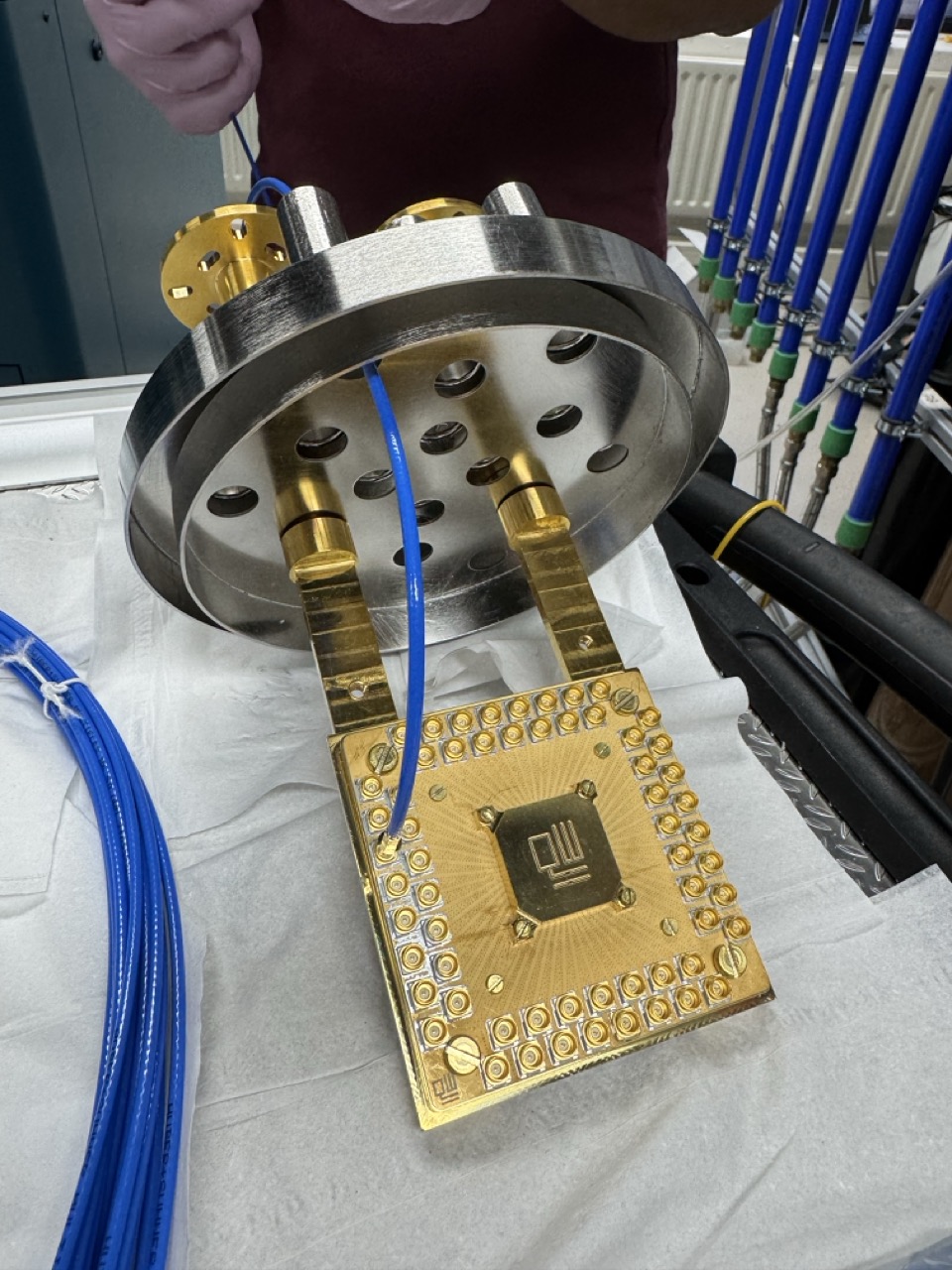
Soprano-D5, QuantWare’s entry-level superconducting QPU, is designed for plug-and-play integration into open quantum stacks, offering well-defined qubit parameters, low residual excitation, and stable operation across repeated cooldowns. For Qblox, that reliability was critical. The project required a processor that could be consistently integrated into multi-vendor environments while maintaining performance across iterative tests.
Beyond delivering on-spec and on time, QuantWare’s team provided tailored guidance on shielding and system configuration, ensuring optimal performance and minimizing residual excited-state populations. This combination of reliable hardware and technical support gave Qblox the foundation to focus fully on advancing their control methods:
“QuantWare’s Soprano-D5 QPU gave us a reliable, high-quality testbed for developing and validating our control electronics. Its stability and clean integration allowed us to push our systems further and explore new approaches to high-fidelity control.” - Willemijn Uilhoorn, PhD, Quantum Application Scientist
Raising the Standard for Open Architecture Quantum Systems
The Qubit Lab now serves as an open architecture reference setup, demonstrating how hardware, control, and calibration can come together in a reproducible, modular way. This environment is driving progress in both control-electronics performance and integration methodology, setting a precedent for collaborative quantum development.
By coupling their electronics with Soprano-D5’s reproducible hardware, Qblox is helping define what “scalable” means in practice: not just more qubits, but better qubits, better control, and better interoperability.
Looking Ahead
Qblox’s work with the Qubit Lab continues to expand the boundaries of precision quantum control. Future upgrades aim to increase system size and complexity by integrating QuantWare's 21-qubit Contralto-D21 QPU, further testing and pushing the performance of Qblox electronics.
For QuantWare, the collaboration underlines the role of accessible, open architecture hardware in accelerating the entire quantum ecosystem. By providing robust and reproducible superconducting processors like Soprano-D5, QuantWare enables partners like Qblox to move faster, refine more accurately, and help the development of scalable quantum systems.
Conclusion
The partnership between Qblox and QuantWare captures the essence of the Quantum Open Architecture movement, a growing community of innovators building interoperable components that advance the field collectively.
With Soprano-D5, Qblox is proving how open architecture quantum processors can accelerate innovation. Together, we are helping shape the foundations of the next generation of large-scale quantum systems.
About Soprano-D5
Soprano-D5 is the world’s most accessible QPU to power your first quantum computer in record time thanks to its user-friendly architecture, instant availability, and competitive pricing. Soprano-D5 is designed for universities and research labs taking their first steps into quantum computing, making it the ideal starting point for developing new quantum hubs.
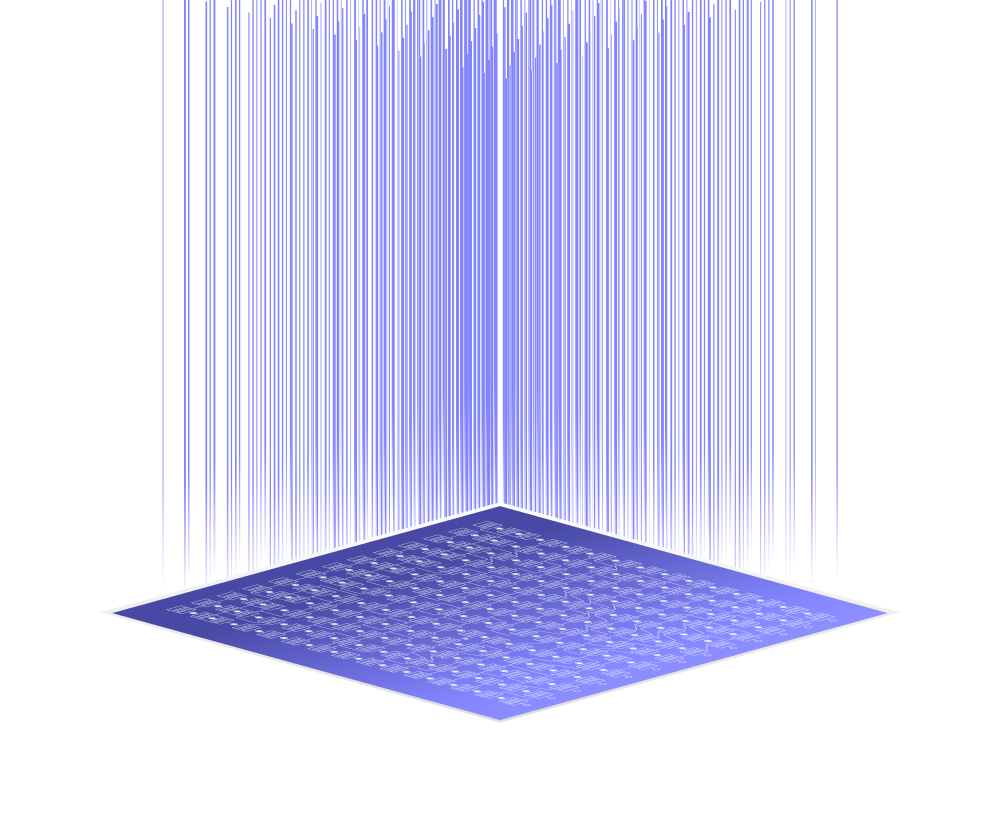
Soprano-D5 is a D-line QPU. The D-line is QuantWare's line of processors that feature tunable transmon qubits and fixed couplers, purpose-built for aggressive qubit count scaling and powering the next generation of large-scale NISQ quantum systems.
.avif)